
Does Washing Your Hair Make It Fall Out? What Shower Shedding Really Means
The shower drain is a terrible place to judge your hair.
A wash after four days can look much worse than a wash after one. Long or curly strands make the pile look larger, and wet hair clumps together. Shampooing, rinsing, and detangling also release hairs that were already loose enough to come away.
A large clump can still signal a change, and wash technique still matters. Judge the pattern over time: shedding, density, scalp comfort, and where the change appears.
Why wash day can look worse than it is
Hair follicles move through periods of growth, transition, rest, and release. The American Academy of Dermatology says shedding 50 to 100 hairs a day is typical. When more follicles enter the shedding phase together, the increase may appear a few months after illness, major stress, childbirth, marked weight loss, or another trigger [1].
Washing makes loose hairs easier to see. Shampooing and rinsing can dislodge hairs that were already in the resting or shedding phase [2]. If several days pass between washes, more strands may appear in one session instead of showing up day by day.
Keep shedding and breakage separate. A shed hair comes away from the follicle. Breakage occurs along the hair shaft. Rough towel drying, forceful detangling, tight styles, and excess heat can damage fragile hair and make the overall change look worse [3]. A dermatologist can examine the scalp and hair if the distinction is unclear.
Does frequent washing cause hair loss?
Current evidence does not support a blanket rule that frequent shampooing causes hair loss.
A 2021 study combined an observational survey with a controlled washing study in Asian participants without specific scalp disorders. In that population, more frequent washing was associated with better hair and scalp measures. Researchers found no objective hair damage from daily washing with the tested shampoo [4]. The findings do not set a universal schedule. They apply only to the populations and products studied. Procter & Gamble funded the work and employed two authors.
A 2026 cross-sectional study in Saudi Arabia also found an association between more frequent shampooing and better self-reported hair and scalp condition [5]. Cross-sectional data cannot prove that shampoo frequency caused the difference. Hair type, styling, product choice, scalp condition, and other habits may affect the result.
These studies challenge the claim that avoiding shampoo always protects hair. They do not show that everyone should wash daily or that every shampoo suits every scalp.
How often should you wash thinning hair?
No single schedule works for everyone.
The AAD recommends washing according to how quickly the hair and scalp become dirty or oily. Straight hair with an oily scalp may need more frequent shampooing. Dry, thick, curly, or tightly textured hair often needs a different schedule [3]. Exercise, sweat, protective styles, styling products, climate, and scalp sensitivity also matter.
Adjust the interval based on the condition of your scalp and hair. If the roots feel coated, styling products are building up, or the scalp stays oily, you may be waiting too long between washes. If the lengths become dry or brittle, check the cleanser, water temperature, conditioning, heat, and handling before blaming the wash frequency.
Persistent itching, pain, burning, scale, sores, or broken skin call for medical evaluation, not more cosmetic product testing.
A calmer wash-day routine. Clean the scalp without punishing the lengths
Apply shampoo mainly to the scalp. Oil, dead skin, sweat, and product residue collect there. Use the pads of your fingers instead of scratching with your nails, then rinse thoroughly. Let the lather and rinse water pass through the lengths instead of scrubbing them together.
Hotter water and harder scrubbing do not improve the wash. If your scalp feels tight, painful, or irritated afterward, reassess your products and technique before adding more steps.
Condition and detangle with less force
Conditioner reduces friction and makes hair easier to detangle. The AAD advises using a wide-tooth comb and adjusting the timing to your hair type. Thick or curly hair may be easier to detangle in the shower with conditioner. Straight hair can dry slightly before combing [3]. Start at the ends and work upward.
Blot or wrap wet hair instead of rubbing it briskly with a towel. Keep dryer temperatures moderate, and loosen styles that pull at the hairline or scalp. These steps do not address a medical cause of shedding. They reduce avoidable shaft damage while you track the larger pattern.
Track the trend, not each strand
Counting every strand each day can create more anxiety than clarity. Once a month, photograph the part, crown, and hairline in the same light, position, and hairstyle. Note major health events, medication changes, rapid weight change, or a new styling practice so you can discuss them with your clinician.
Researchers use standardized wash tests to study shedding, but those methods control timing and collection and may include hair-diameter analysis [6]. A pile in the drain is not a diagnostic test.
When to see a dermatologist
Arrange an evaluation if shedding rises noticeably and stays elevated, the part or hairline changes, or overall fullness continues to decline. Sudden or patchy loss, scalp pain, intense itching, active inflammation, spreading scale, sores, or broken skin should be assessed sooner.
Bring photos and a simple timeline. Include when the change began, whether it was gradual or sudden, and any illness, surgery, major stress, weight change, medication change, or tight styling that came before it. Do not stop prescription medication because of what you saw in the shower drain. Speak with the prescribing clinician.
Where KeraFactor fits
Cleansing removes oil, sweat, dead skin, and product residue while respecting the hair fiber. Cosmetic scalp care can support scalp condition and the appearance of healthier-looking hair. It cannot identify why hair is shedding or replace medical care.
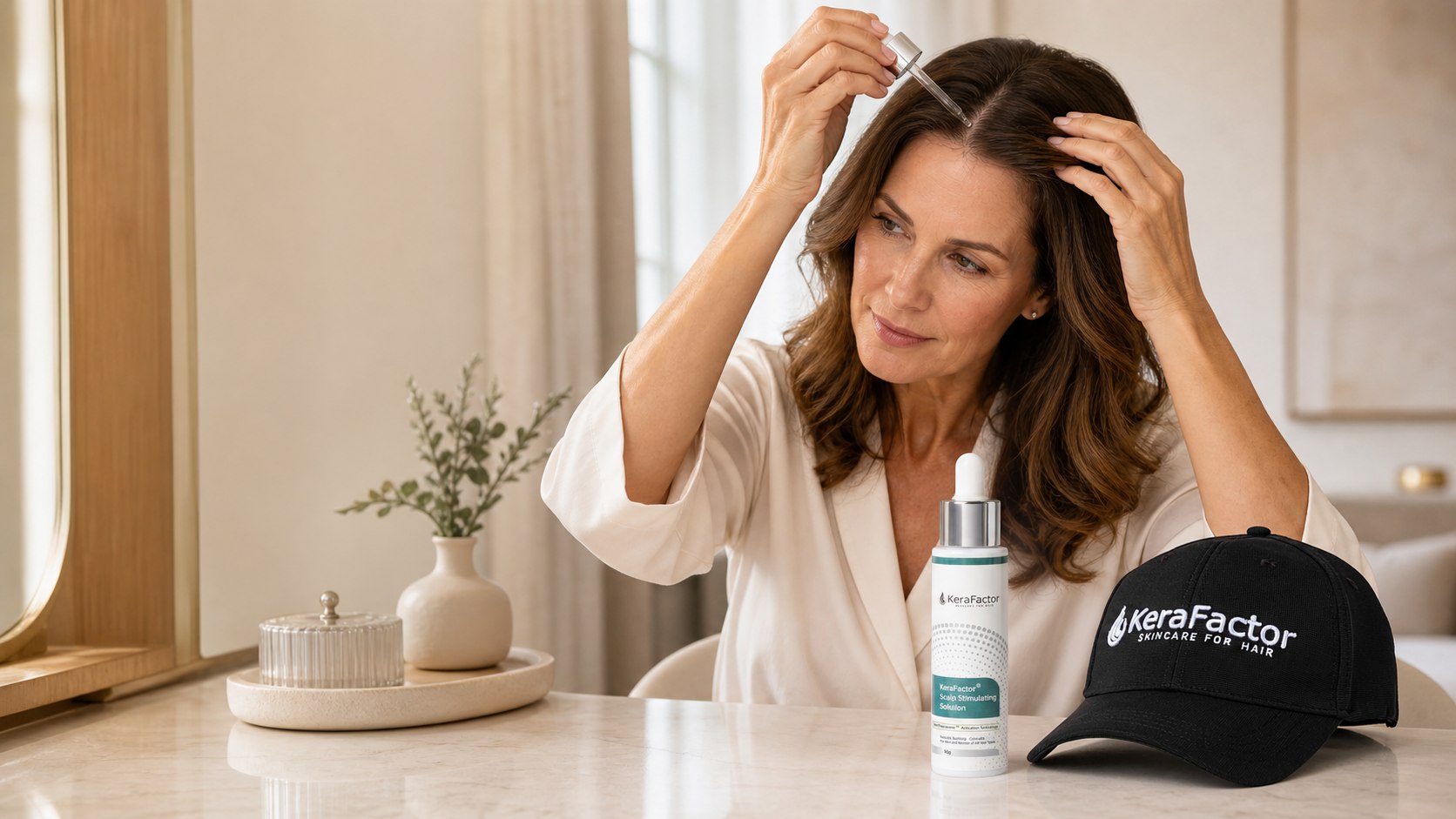
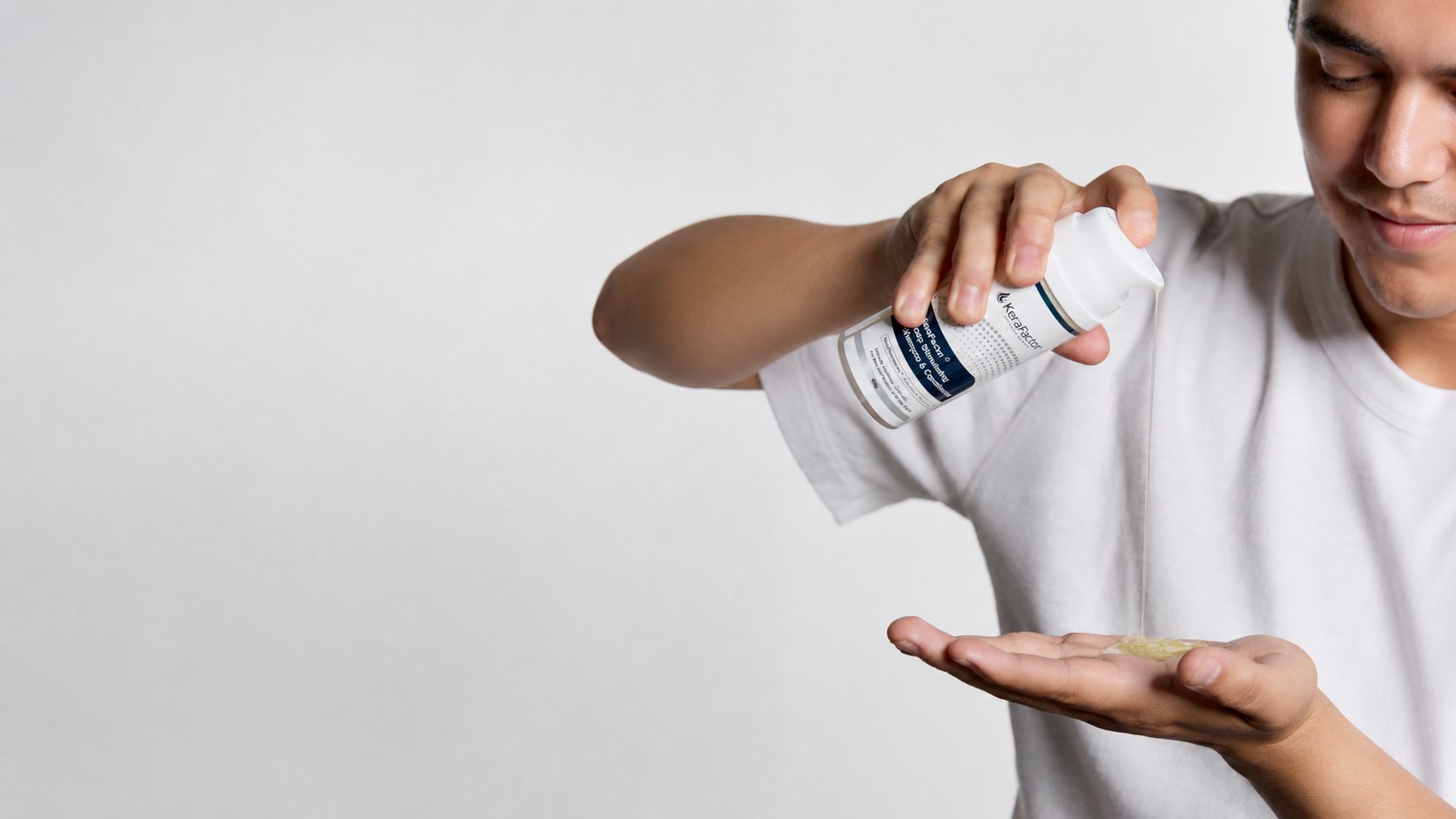
KeraFactor's current at-home scalp range includes Scalp Stimulating Shampoo & Conditioner, a 2-in-1 scalp-care product, and Scalp Stimulating Solution, a leave-on cosmetic serum [7,8]. For a more structured routine, choose products that suit your hair and scalp, follow the current label, and keep the routine consistent. Do not change everything after one difficult wash day.
Treat the drain as one data point and judge the pattern over time.
Source notes
Research query: hair washing frequency, shampoo, shower shedding, breakage, scalp condition, and when hair changes need evaluation. Primary and professional sources were retrieved on August 22, 2026 (EDT). Marketing and product statements are identified as first-party KeraFactor information.
1. American Academy of Dermatology. Do you have hair loss or hair shedding?. Source for the typical 50-to-100-hair daily range, excessive shedding, and delayed timing after common stressors. Accessed August 22, 2026.
2. Cleveland Clinic. Here's Why Your Hair Falls Out in the Shower, May 19, 2025. Dermatologist-reviewed explanation of why shampooing and rinsing release hairs already in a shedding phase. Accessed August 22, 2026.
3. American Academy of Dermatology. Tips for healthy hair. Guidance on wash frequency by scalp and hair needs, scalp-focused shampooing, conditioning, detangling, towel handling, and heat. Accessed August 22, 2026.
4. Punyani S, Tosti A, Hordinsky M, Yeomans D, Schwartz J. The Impact of Shampoo Wash Frequency on Scalp and Hair Conditions. Skin Appendage Disorders. 2021;7(3):183-193. PMID: 34055906. The article states the Asian-population limits and discloses that Procter & Gamble funded the study and employed two authors. Accessed August 22, 2026.
5. Rubaian NB, et al. The Relationship Between the Frequency of Hair Shampooing and the Condition of Hair and Scalp Among the Population of Saudi Arabia. Dermatology Research and Practice. 2026. PMID: 42199383. Cross-sectional association only; it does not establish causation or a universal wash schedule. Accessed August 22, 2026.
6. Li X, et al. Hair Shedding Evaluation for Alopecia: A Refined Wash Test. Clinical, Cosmetic and Investigational Dermatology. 2022;15:117-126. PMID: 35115799. Source for the controlled clinical wash-test context, not for consumer self-diagnosis. Accessed August 22, 2026.
7. KeraFactor. Scalp Stimulating Shampoo & Conditioner. First-party source used only to confirm the live product and internal link. Accessed August 22, 2026.
8. KeraFactor. Scalp Stimulating Solution. First-party source used only to confirm the live product and internal link. Accessed August 22, 2026.