

Is Your Hairstyle Too Tight? How Tension Can Affect the Hairline
A finished hairstyle can still put too much tension on the hairline.
The first sign may be a headache after a salon appointment, tenderness around the temples, or short broken hairs where a ponytail sits. These signs are easy to dismiss when the style looks good. They may mean the style is pulling too hard.
Repeated pulling can contribute to traction alopecia, a type of hair loss caused by ongoing tension on the hair and follicle [1,2]. It can affect anyone who pulls their hair back or wears it in tight braids for work, dance, sports, religious observance, or personal preference. This is not about blaming a culture, profession, or favorite look. It is about recognizing excessive tension and changing it.
Tight does not have one look
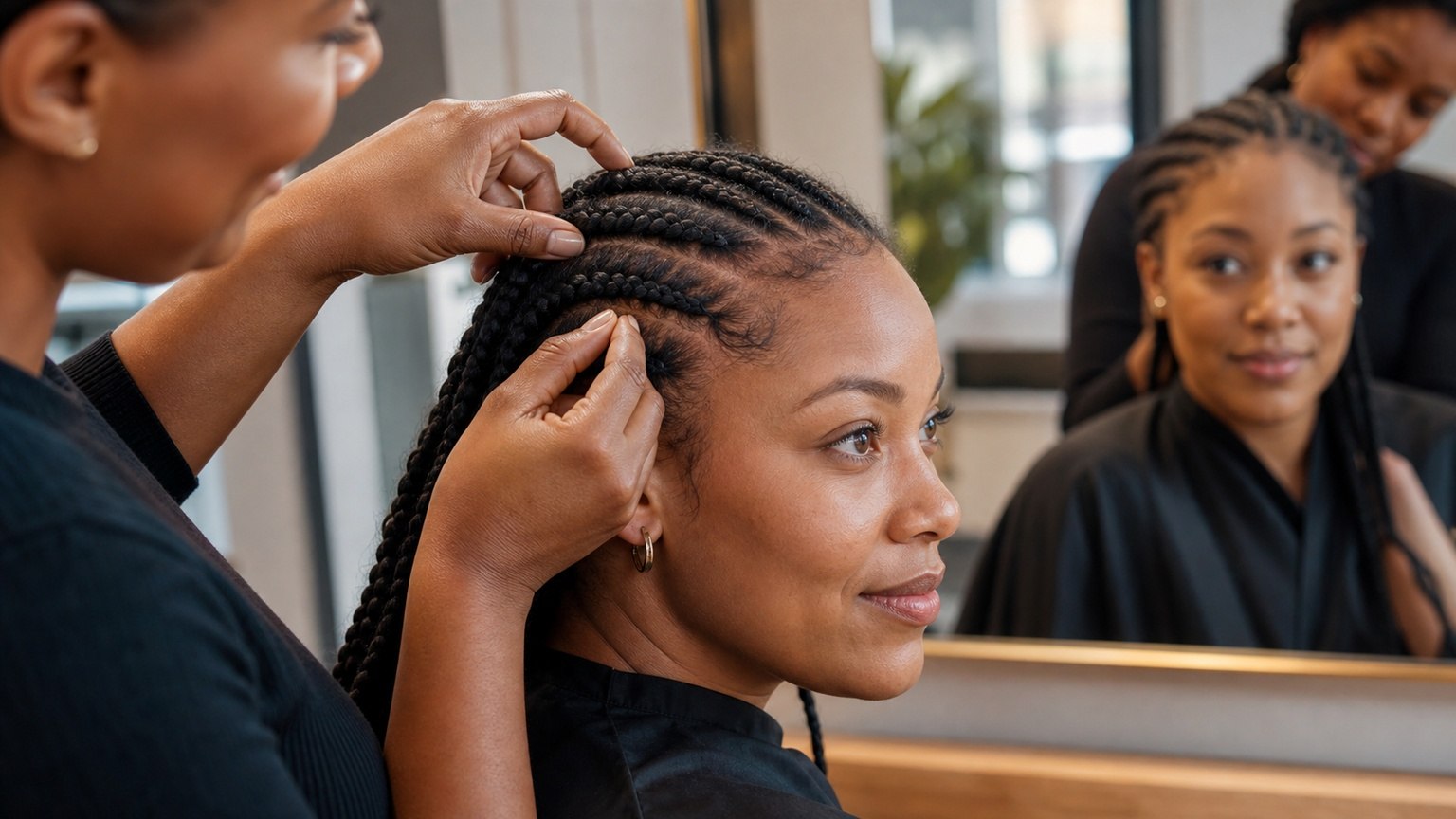
Traction can come from tightly pulled ponytails and buns, braids or cornrows installed under tension, heavy locs, weaves, extensions, rollers worn repeatedly, and hair pulled tightly beneath a scarf or other covering [1,2]. A familiar style can become a problem when it puts force on the same area day after day.
The label "protective" does not make a style tension-free. A protective style may reduce daily manipulation of the hair shaft, but it can still strain the hairline if the base is tight, the added hair is heavy, or the style stays in too long.
Risk depends on the strength and duration of the pull, not just the style name. A 2018 clinical review notes that chemical relaxing can make hair less resistant to traction when combined with high-tension styling [3]. Heat, rough removal, and tight reinstallation can add more stress before the hair has recovered.
What repeated pulling can do
Hair follicles can tolerate some movement. Repeated or prolonged force is the concern.
Early traction alopecia may appear as nonscarring hair loss in the area under tension. Broken hairs, small bumps or pustules, tenderness, itching, and headache can occur [3]. The hairline is a common place to see changes, but the pattern follows the style. A tight bun may affect the sides or back. Braids may cause thinning between sections. Extensions may put the most stress where they attach.
Removing tension early may allow the hair to recover. Longstanding traction can damage follicles and progress to permanent scarring hair loss [2,3]. Seek medical evaluation for a shiny, smooth patch instead of trying another cosmetic product.
The warning signs to act on now
Do not count hairs or try to diagnose the problem yourself. Check the areas where the style pulls hardest:
- pain, stinging, or a headache during or after styling;
- crusting, bumps, redness, or sections of scalp lifted by tension;
- broken hairs around the forehead or temples;
- a hairline that looks different in monthly photos;
- a patch that follows the placement of braids, a bun, an extension, or a covering.
The American Academy of Dermatology gives a clear rule: if the hairstyle feels painful, it is too tight [1]. Ask for it to be loosened. Do not wait several days for the pain to become tolerable.
A mirror cannot confirm the cause. Pattern hair loss, alopecia areata, inflammatory scalp conditions, and other problems can affect the hairline or create patches. If the change persists after removing the tension, or the cause is unclear, see a board-certified dermatologist.
How to lower tension without abandoning your style
Start at the hairline
Ask your stylist to keep the edges looser and avoid using fragile baby hairs as anchor points. Larger braids often distribute force better than very small, tight sections. Shorter or lighter extensions place less weight on the attachment points. If a weave, braid, or extension causes pain or scalp irritation, have the affected area loosened or remove the style [1].
Change where the force lands
Rotate ponytail height, shift the part, and alternate pulled-back styles with loose options. Using the same placement repeatedly concentrates stress in the same follicles. The AAD also advises limiting how long braids or locs remain in place and giving the hair a break between tight styles [1].
Be gentle on removal day
Take your time when removing a style. Detangle in sections, use enough slip, and stop if a knot requires force. Do not follow one high-tension style immediately with another. If the scalp is sore, crusted, inflamed, or broken, pause styling and leave-on cosmetic products until the skin is comfortable or a clinician has advised you.
Check for pain before the client leaves
Stylists and aesthetic professionals should ask: "Do you feel pulling or pain anywhere, especially around the edges?" If the answer is yes, adjust the style before the client leaves.
Stay within scope if you see broken hairs, a changing hairline, redness, pustules, or a smooth patch. Describe what you see, avoid diagnosing it, and recommend a dermatology evaluation. Put product recommendations on hold until active irritation and unexplained hair loss have been addressed.
When a dermatologist should step in
Book an evaluation if you see a receding hairline, repeated breakage in the same place, a distinct patch, or no improvement after changing the style. Seek care sooner if pain continues after the style is loosened or you see significant redness, pustules, spreading scale, broken skin, or a smooth and shiny area.
Bring a few photos taken in the same light and with the hair parted the same way. Tell the dermatologist which styles you wear, how long you keep them, whether they hurt, and whether you use extensions, relaxers, or frequent heat. This history can help distinguish traction from another cause of hair loss.
Where cosmetic scalp care fits
Cosmetic scalp care cannot cancel out mechanical tension or restore a permanently scarred follicle. Loosen or remove the source of pulling first. Have medical concerns evaluated before adding cosmetic products.
Once the scalp is intact and comfortable, keep the routine simple. Wash according to your hair and scalp needs, focus shampoo on the scalp, and avoid aggressive scratching. Apply leave-on products only as directed.
KeraFactor's Scalp Stimulating Shampoo & Conditioner and Scalp Stimulating Solution are cosmetic scalp care options designed to support scalp condition and the appearance of healthier-looking hair. They do not diagnose or treat traction alopecia. If you are under a dermatologist's care, ask how cosmetic products fit into the plan.
Source notes
Research query: tight hairstyles, traction alopecia, early warning signs, lower-tension styling, extensions, and dermatology referral. Primary and professional sources were retrieved on August 29, 2026 (EDT). KeraFactor links were checked live the same day. First-party product language is treated as marketing, not independent evidence.
1. American Academy of Dermatology. Hairstyles that pull can lead to hair loss. Updated November 6, 2024. Source for common high-tension styles, warning signs, practical ways to reduce tension, and the advice that a painful style is too tight. Accessed August 29, 2026.
2. British Association of Dermatologists and British Hair and Nail Society. Traction alopecia. Patient information on causes, symptoms, early recovery potential, longstanding follicle damage, and referral context. Accessed August 29, 2026.
3. Billero V, Miteva M. Traction alopecia: the root of the problem. Clinical, Cosmetic and Investigational Dermatology. 2018;11:149-159. doi:10.2147/CCID.S137296. PMID: 29670386. Clinical review used for the role of pulling intensity and duration, chemical relaxation as a cofactor, early signs, and progression to scarring. Accessed August 29, 2026.
4. KeraFactor. Scalp Stimulating Shampoo & Conditioner. First-party source used only to verify the live product and proposed internal link. Accessed August 29, 2026.
5. KeraFactor. Scalp Stimulating Solution. First-party source used only to verify the live product and proposed internal link. Accessed August 29, 2026.