

How Beauty Professionals Can Discuss Thinning Hair
Beyond the Hairline: How Beauty and Aesthetic Professionals Can Support Clients with Thinning Hair
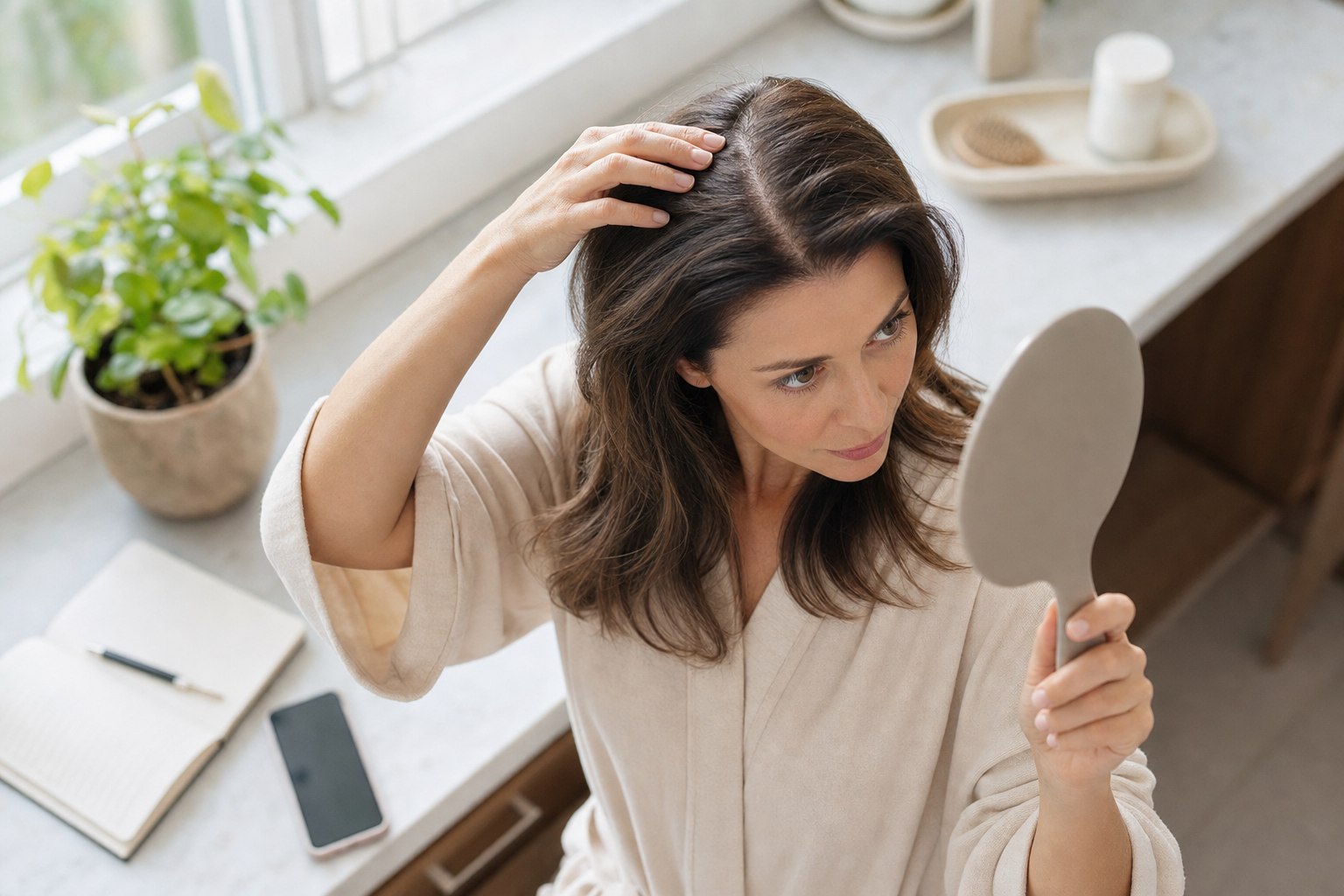
During a routine appointment, a client may look in the mirror and say, “My part looks wider than it used to.” Someone else may mention seeing more hair in the shower.
Hair concerns can surface in the salon chair, facial room, or medical-aesthetic setting. A systematic review found that androgenetic alopecia can affect psychological well-being and quality of life. A client may raise the subject only after noticing a change for some time.
The American Academy of Dermatology recognizes August as Hair Loss Awareness Month. It is a good time to help clients discuss hair and scalp changes. Listen, recognize visible or reported signs that warrant referral, and offer cosmetic scalp care within your professional license and local requirements.
This article is educational and is not medical advice. Follow your license, training, workplace protocols, and applicable laws. Medical personnel in aesthetic practices should follow their clinical protocols. Nonmedical personnel should follow local scope-of-practice rules and established workplace protocols, including referral to an appropriate medical provider when indicated.
Hair thinning is common, but the reasons vary
Androgenetic alopecia, often called male or female pattern hair loss, affects an estimated 50 million men and 30 million women in the United States, according to MedlinePlus Genetics. It is the most common form of hair loss.
The American Academy of Dermatology lists many other possible causes of shedding or thinning, including age, hormonal changes, illness, medication, nutritional deficiencies, tight hairstyles, and physical or emotional stress. Some changes appear gradually; others show up quickly.
You may notice a wider part, excess shedding, breakage, redness, or a change in scalp condition. Seeing a change does not establish its cause. When appropriate, record the client’s own words and observable service-related facts without offering medical interpretation.
How to begin without making the client uncomfortable
A blunt question such as “Are you losing your hair?” can make someone feel exposed. A neutral observation gives the client room to decide how much they want to share.
Try:
“I noticed a change in density around your part. Is that something you have noticed at home?”
Or:
“How has your scalp been feeling lately? Have you seen any change in shedding or sensitivity?”
If the client wants to continue, a few simple questions can clarify what they are experiencing:
- When did you first notice the change?
- Has it been gradual, or did it seem to happen suddenly?
- Have you noticed discomfort, redness, scaling, or broken skin?
- Have you recently changed your hair or scalp products?
These questions are only a starting point. They do not identify the cause. If what the client reports raises concern, referral is safer than speculation. When someone volunteers health, medication, hormonal, or nutritional concerns, recommend discussing them with a licensed medical professional.
When referral should come before product recommendations
Recommend medical evaluation before suggesting or applying scalp products when hair loss is sudden or patchy, when shedding increases noticeably, or when the scalp is painful, inflamed, actively irritated, or has broken skin.
The Mayo Clinic advises speaking with a doctor about sudden or patchy hair loss or a noticeable increase in shedding during washing or combing. Circular bald areas, pain, itching, redness, swelling, broken hairs, or spreading scale also deserve medical attention. Persistent hair loss that is causing distress is another reason to seek evaluation.
You might say:
“There are several reasons this can happen. I recommend having it evaluated so you understand what may be contributing to the change. Once you have that guidance, we can help you build a scalp-care routine that fits the plan.”
When the scalp is broken, inflamed, or actively irritated, follow current product directions, professional protocols, and medical guidance before applying a scalp product.
What useful follow-up looks like
After referral has been made where needed, you can help the client create a routine they can maintain.
Bring the scalp into regular care
Hair care often focuses on the strand, while the scalp receives attention only when it becomes oily, dry, itchy, or uncomfortable. A consistent routine should keep the scalp clean and comfortable without excessive product buildup or stripping.
The American Academy of Dermatology’s healthy-hair guidance recommends applying shampoo primarily to the scalp, using conditioner after washing, handling wet hair gently, and limiting excessive heat. The best frequency varies with hair texture, styling habits, activity level, and scalp condition.
Make the routine workable
Explain when each product should be applied, how much to use, and what the client should expect from cosmetic care. If identifiable progress photos are used, follow the written-consent and privacy requirements applicable to your practice. HIPAA applies to covered healthcare entities and their business associates; state privacy laws may apply more broadly.
Cosmetic products may nourish the scalp and support healthier-looking hair. They do not diagnose or treat the underlying causes of hair loss.
Ask again at the next visit
At follow-up visits, ask how the scalp feels and whether the client is following the routine comfortably. If shedding accelerates or new symptoms appear, recommend returning to a licensed medical professional.
A supportive role for KeraFactor
KeraFactor publishes this article and manufactures the product discussed below.
KeraFactor products are cosmetics and are not intended to diagnose, treat, cure, or prevent disease. According to the KeraFactor Scalp Stimulating Solution page accessed July 25, 2026, the current solution is a drug-free, hormone-free topical scalp-care product. Professionals and customers should review the current label, ingredient list, and directions because product information can change.
The current product page describes the solution as formulated to nourish the scalp and support visibly thicker, fuller, and stronger-looking hair. It can be incorporated into professional and daily at-home cosmetic care when appropriate. As with any cosmetic product, individual experiences vary. Use only as directed.
KeraFactor does not replace medical evaluation. Its role is cosmetic scalp care, used according to current directions and with clear expectations.
From concern to a useful next step
Clients may not know whether they are seeing normal shedding, breakage, a scalp concern, or a form of hair loss. They may only know that something has changed.
When the cause is unclear or symptoms are concerning, refer before recommending a product. If cosmetic scalp care is appropriate, keep the routine simple, explain its limits, and follow up.
Sources
Accessed July 24–25, 2026.
1. York K, Meah N, Bhoyrul B, Sinclair R. [The psychological consequences of androgenetic alopecia: A systematic review](https://pubmed.ncbi.nlm.nih.gov/35403805/). *Journal of Cosmetic Dermatology*. 2022.
2. American Academy of Dermatology. [Awareness campaigns](https://www.aad.org/public/public-health/awareness-campaigns).
3. MedlinePlus Genetics. [Androgenetic alopecia](https://medlineplus.gov/genetics/condition/androgenetic-alopecia/).
4. American Academy of Dermatology. [Hair loss: Who gets and causes](https://www.aad.org/public/diseases/hair-loss/causes/18-causes).
5. Mayo Clinic. [Hair loss: Symptoms and causes](https://www.mayoclinic.org/diseases-conditions/hair-loss/symptoms-causes/syc-20372926).
6. American Academy of Dermatology. [Tips for healthy hair](https://www.aad.org/public/everyday-care/hair-scalp-care/hair/healthy-hair-tips).
7. KeraFactor. [Scalp Stimulating Solution](https://shop.mykerafactor.com/products/kerafactor-scalp-stimulating-solution)